Slot machines can seem confusing at first, but understanding paylines makes the game much clearer. Paylines are specific patterns across the reels where matching symbols must land for you to win a payout. When symbols line up on an active payline, the machine awards credits based on the paytable.
Different slot machines have different numbers of paylines. Some classic slots have just one payline straight across the middle. Modern slots can have five, ten, twenty, or even hundreds of ways to win. The number of paylines affects how often you might win and how much you need to bet.
Knowing how paylines work helps you make better choices when playing slots. You’ll understand why certain spins pay out and others don’t. You’ll also learn how payline mechanics change your overall gaming experience and what to look for when choosing which slot to play.
Understanding Slot Machine Paylines
Paylines are the patterns on slot reels where matching symbols must land for you to win. The number and type of paylines vary widely between machines, from a single line to hundreds of patterns, and they directly determine how often and how much you can win.
What Are Paylines?
A payline is a specific pattern across the reels that creates a winning combination when matching symbols align on it. You only win when symbols land on an active payline you’ve bet on.
Classic slot machines had one payline running straight across the middle of three reels. When three matching symbols lined up on that center line, you won. Modern slots work on the same basic principle, but the patterns have become more complex.
Each payline connects positions across the reels from left to right. The symbols must land in these exact positions to count as a win. If you match symbols in a pattern that isn’t an active payline, you don’t win anything.
The paytable shows you which patterns count as paylines on any slot machine. Some games display all paylines clearly on the screen. Others require you to check the paytable to see the winning patterns.
Types of Paylines in Modern Slots
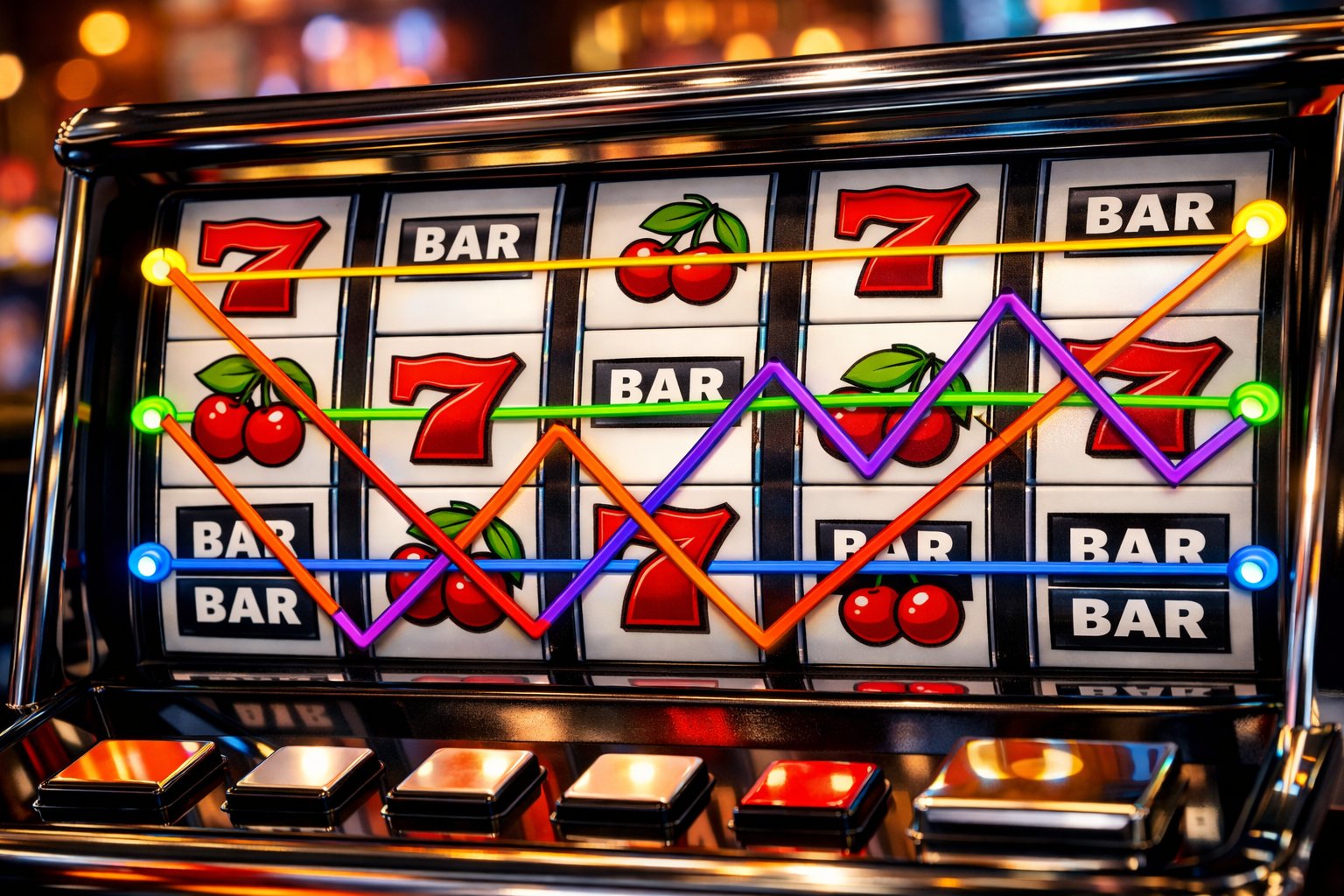
Straight paylines run horizontally across the reels at different heights. These are the simplest patterns and appear most often on classic-style slots.
Diagonal paylines connect symbols at angles across the reels. A diagonal line might start at the bottom left and move up to the top right, creating a slanted winning pattern.
Zigzag paylines create V-shapes, W-shapes, or other irregular patterns across the reels. These complex patterns are common on video slots with five or more reels.
Ways-to-win slots replace traditional paylines with a different system. You win when matching symbols appear on adjacent reels from left to right, regardless of their vertical position. A slot with 243 ways to win has five reels with three symbols each visible on screen.
Fixed vs. Adjustable Paylines
Fixed paylines require you to bet on all available lines with every spin. You can’t reduce the number of active lines. A slot with 25 fixed paylines means you must play all 25 lines each time.
Adjustable paylines let you choose how many lines to activate per spin. You can play one line, some lines, or all available lines. Your total bet equals your bet per line multiplied by the number of active lines.
Fixed paylines often cost less per spin at minimum bet because the coin value is lower. Adjustable paylines give you more control over your total wager. However, playing fewer lines on an adjustable slot reduces your chances of winning on any given spin.
How Payline Mechanics Impact Slot Gameplay
Payline mechanics directly affect how much you can win, which symbols matter on each spin, and how you should adjust your betting approach. The way paylines function shapes every aspect of your slot machine experience, from basic payout calculations to the strategy you use when choosing your bet size.
Calculating Payouts with Paylines
Your total payout depends on two main factors: the number of active paylines you win on and the paytable value for each winning combination. When you land matching symbols on a payline, the game multiplies your bet per line by the symbol’s payout multiplier.
For example, if you bet $1 per line and land three matching symbols worth 10x on two different paylines, you win $20 total. Each payline pays independently, so winning on multiple lines during one spin adds up quickly.
Key payout factors include:
- Bet amount per payline
- Number of matching symbols
- Symbol payout values from the paytable
- Total number of winning paylines hit
Fixed payline slots require you to bet on all lines, which means your total bet equals the number of paylines multiplied by your bet per line. Adjustable payline slots let you choose how many lines to activate, giving you control over your total bet size.
The Role of Symbols on Paylines
Symbols only count toward a win when they land on active paylines in the correct pattern. Most slots require symbols to appear from left to right starting on the first reel, though some games pay both ways.
Wild symbols substitute for regular symbols on paylines, helping you complete winning combinations. They can turn a near-miss into a payout by filling gaps in symbol sequences.
Different symbol types on paylines:
- Standard symbols: Must match exactly on the payline
- Wild symbols: Replace other symbols to create wins
- Scatter symbols: Usually pay regardless of payline position
The number of symbols you need varies by game. Three matching symbols is the minimum for most slots, but five-of-a-kind combinations deliver the highest payouts. Each additional matching symbol on a payline increases your win amount according to the paytable.
Betting Strategies Based on Paylines
Your betting strategy should account for how many paylines a slot offers and whether they’re fixed or adjustable. More paylines increase your chances of winning but also raise your total bet per spin.
With adjustable paylines, betting on all available lines gives you the maximum winning potential. Reducing active paylines lowers your cost per spin but also means you might miss wins on deactivated lines.
For fixed payline slots, focus on adjusting your bet per line rather than the number of lines. This keeps all winning opportunities active while letting you control your risk level.
Budget considerations matter with high payline counts. A 50-payline slot with a $0.10 bet per line costs $5 per spin. Calculate your total bet by multiplying paylines by your per-line wager to avoid depleting your bankroll too quickly.